A sewer line is the one big pipe that carries every drain in your house out to the street or septic system. When it cracks, sags, or fills with roots, water has nowhere to go. It turns around and comes back up through the drain closest to the floor.
Worthybodies Plumbing is a referral service. We do not do the repair work. We connect homeowners in Columbus, OH with independent local providers who handle sewer line repair. This page explains what is going on underground, how trouble grows over time, and how to weigh estimates without pressure. Request an estimate first, compare your choices, and decide when you are ready.
Sewage Backing Up? Start Here
Think of your sewer line as a long, hidden hallway. Every drain in the house walks down it on the way out. If the hallway is blocked, the crowd piles up and turns around. That is how sewage ends up in a tub or a basement floor drain.
While you arrange help, keep it simple:
- Stop running water. Skip laundry, dishes, showers and flushing.
- Keep children and pets away from the wet area.
- Stay out of standing water near outlets or cords.
- Open a window if the smell is strong.
- Take photos before you clean anything up.
Get Started
Signs Your Sewer Line May Be Failing
Pipes tell stories, and sewer pipes tell theirs slowly. One slow sink is usually a small clog. Trouble in several places at once points farther down the line.
- Slow drains in more than one room
- Gurgling from toilets or floor drains
- A sewage or rotten-egg smell indoors or in the yard
- Soggy, extra-green or sunken patches in the lawn
- Water rising in a floor-level drain, often in the basement
What Wears Down a Sewer Line
Picture a garden hose buried for fifty years. It would crack, bend and clog. Sewer pipes face the same aging, plus a few extra troubles.
- Tree roots slip into tiny cracks looking for moisture, then grow thick.
- Older materials like clay or cast iron break down. Frame houses and bungalows from many decades ago often have them.
- Deep winter frost moves soil and can bend or crack a pipe.
- Spring flooding and hard storms overload the line and wash soil from around it.
- Grease and wipes collect and narrow the pipe.
How the Damage Grows: A Timeline
A sewer problem is like a small roof leak. It starts quiet, then spreads the longer it sits.
The First Hours
Wastewater spreads across the bottom floor of the house. Carpet and drywall soak it up fast, and the smell settles in. Many providers can respond quickly, so ask about availability when you reach out.
The Next Few Days
Moisture climbs the walls. Mold can begin to grow. Boxes, furniture and stored items may be ruined, and cleanup grows more involved.
Weeks Later
A cracked pipe underground keeps leaking and washes soil away. The ground above can sink. A repair that was small at the start can turn into a larger dig.
Get Started
How Providers Find the Cause
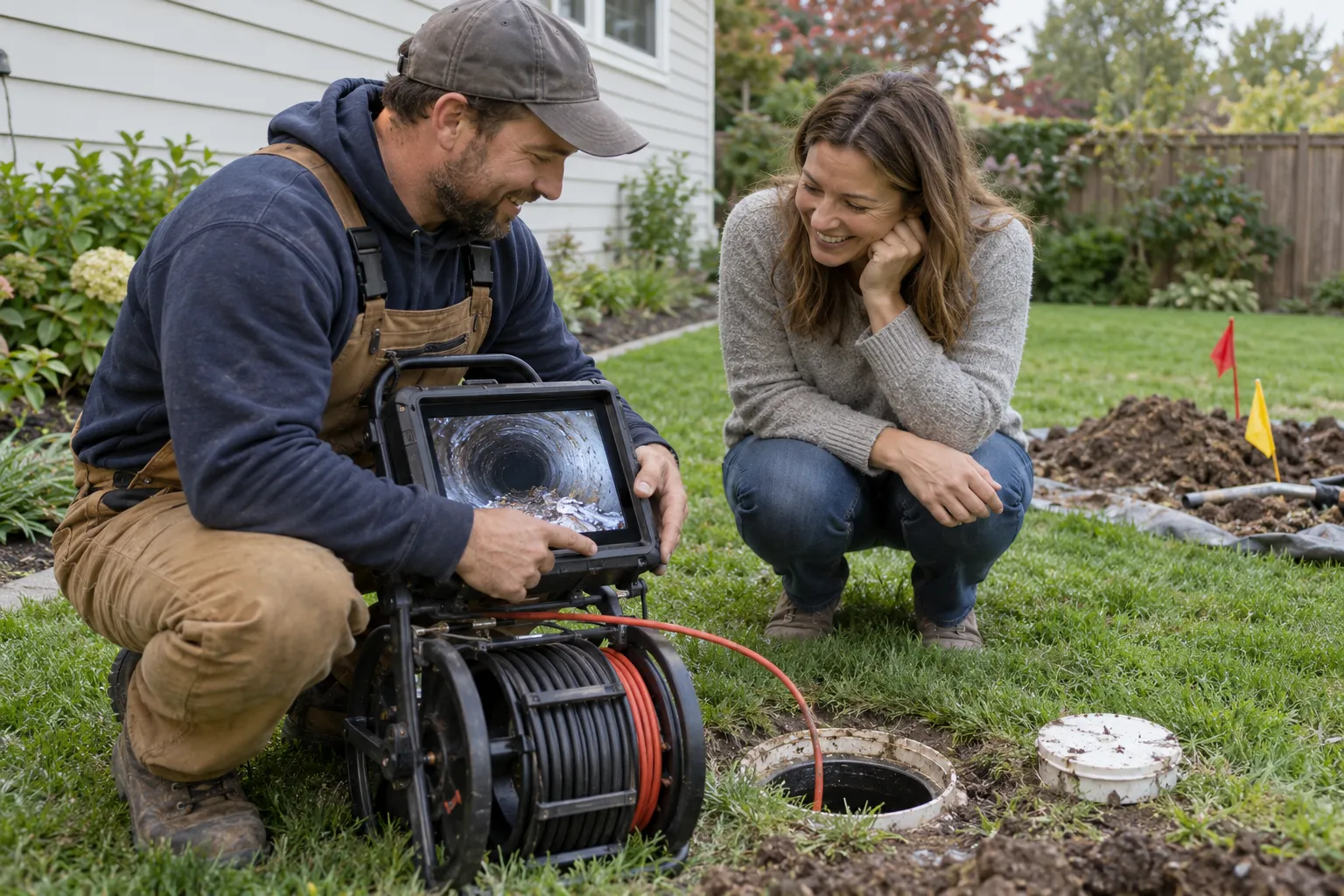
Most providers feed a small waterproof camera into the line. It works like a doctor using a scope instead of guessing. The video shows roots, cracks, breaks and low spots where water sits.
Some providers also use a handheld locator to mark the spot and depth. That keeps digging small. Ask to see the footage. A clear picture makes estimates much easier to compare.
Repair Options Compared
Choosing a repair is like choosing between patching a tire and buying a new one. The right pick depends on the damage.
Spot Repair
A provider digs to one bad section and replaces only that piece. This suits a line that is otherwise in good shape.
Pipe Lining
A resin-soaked sleeve is pulled inside the old pipe and hardened. It makes a new pipe within the old one with less digging. The old pipe must still be mostly intact.
Pipe Bursting
A new pipe is pulled through while the old one is broken apart. It needs small pits at each end instead of one long trench.
Full Replacement
An open trench is the most disruptive choice. It is sometimes the only one when a pipe has collapsed or sagged badly.
Permits and Property Lines
Part of the line sits under your yard. The section near the street may belong to the city or utility. Rules differ from place to place.
Many areas require a permit to dig or replace a sewer line, plus an inspection afterward. Ask each provider who handles the permit and who is responsible for each section. Your local building office or utility can confirm where your responsibility ends.
Comparing Estimates Without Pressure
Compare, then decide. A good estimate is in writing. It names the repair method, the length of pipe, the depth, and what happens to your yard afterward.
Lay two or three estimates side by side. If the methods differ, ask why. You owe no one a quick answer. Some policies may cover sudden damage, so check your policy. Providers can often help document damage for a claim.
Get Started
Questions to Ask the Plumber
- What did the camera show, and can I see it?
- Why this method instead of the others?
- Is a permit needed, and who gets it?
- How much of my yard will be dug up?
- What does the written estimate include and leave out?
- Is there a warranty on the work, and what does it cover?
If you want to talk through your options, request a callback to check provider availability.
Get Started
What's Included
Camera Inspection
A provider runs a small camera through the line to see cracks, roots and low spots.
Spot Repairs
Replacing one damaged section of pipe, when the rest of the line is still sound.
Pipe Lining
A new liner is hardened inside the old pipe, often with much less digging.
Full Replacement
Removing a collapsed or badly sagging line and installing new pipe in its place.
Typical Sewer Repair Cost Ranges
Sewer costs swing widely with pipe depth, length, soil and method. These are typical U.S. ranges only. Always get a written quote that lists exactly what the work includes before you agree.
| Item | Typical range | Notes |
|---|
| Camera inspection | $100 – $500 | Shows the cause before any digging |
| Spot repair | $1,000 – $4,000 | One short section replaced |
| Pipe lining | $3,000 – $10,000 | Less digging, needs mostly intact pipe |
| Pipe bursting | $4,000 – $15,000 | Small entry pits instead of a trench |
| Full trench replacement | $5,000 – $25,000 | Cost rises with depth and length |
| Permit and inspection | $50 – $500 | Varies by local rules |
Get Started
How It Works
Share Your Situation
Tell us what you see, such as backups, smells or soggy ground, using the estimate request form.
Get Matched Locally
A local provider in our network reviews your details and reaches out.
Compare Written Estimates
Look at the method, the scope and the price on each estimate.
Decide When Ready
Pick the provider and plan you trust. Saying no is always okay, and there is no obligation.
Why Call Worthybodies Plumbing
Compare Before You Commit
Request an estimate and weigh providers side by side, with no obligation to say yes.
Local Providers
Independent providers in our network know the soil, frost depth and housing types around Columbus.
Plain Explanations
Each step is explained in everyday words, so you understand the repair before you decide on it.
No Pressure
You choose the pace. Take time to read each written estimate before you decide.
Other Services