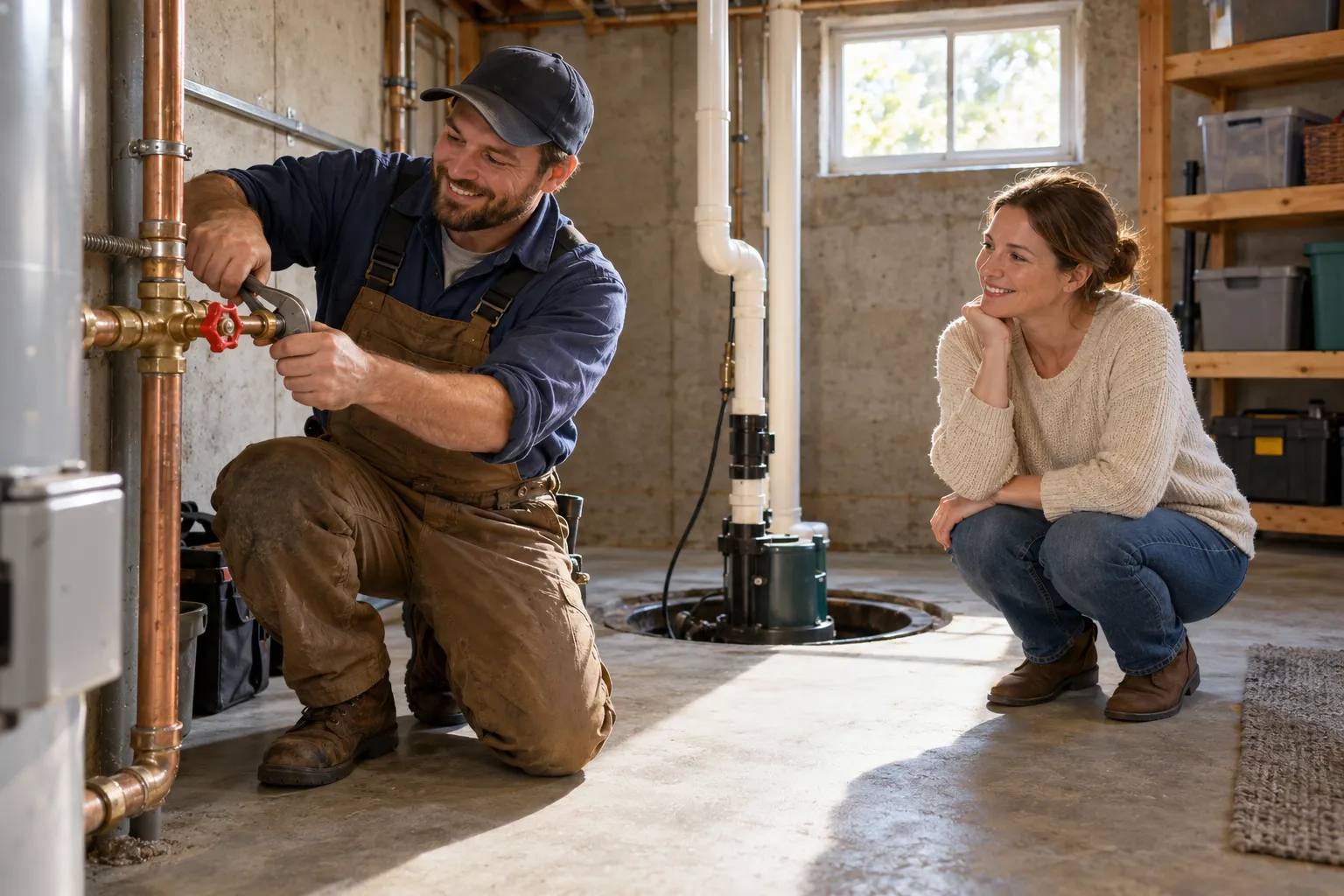
Think of your plumbing like a garden hose running through the walls of your house. When a hose splits, water goes where you did not plan. Worthybodies Plumbing is a referral service. It connects you with independent local providers who handle emergency plumbing in Columbus.
Worthybodies Plumbing does not do the repair itself. The providers in our network do the work. Our job is to help you compare your options. You can request an estimate, read what each provider offers, and choose without pressure. There is no obligation to hire anyone.
If the situation is moving fast, Request a callback to check provider availability. Many providers can respond quickly, though hours vary by company and by the day. Whatever you choose, ask for a written quote before work begins.
Water Where It Should Not Be? Start Here
Take a breath first. A plumbing emergency feels huge, but the first steps are small and simple. Think of a bathtub that keeps filling. You do not mop first. You turn off the tap.
Your pipes work the same way. Stop the flow, protect what you can, then get a qualified provider on the way.
The First Ten Minutes: Stop the Water
Find your main shutoff valve. In many homes with full basements, it sits near where the water line enters, close to the meter. Turn it clockwise until it stops.
Then open a low faucet to let the pipes drain. Switch off power to wet areas only if you can reach the panel without standing in water. If you cannot, stay out and wait for help.
Move rugs, boxes and electronics out of the wet zone. Take a few photos. These help later if you make a claim.
Get Started
What Counts as a Plumbing Emergency?
A good rule is this: if water is spreading and you cannot stop it, treat it as an emergency. Common examples include:
- A burst or split pipe
- Sewage backing up into a tub, floor drain or basement
- No way to shut off a leaking fixture
- A water heater leaking steadily or making loud banging sounds
- A sump pump that has failed while water is rising
A slow drip under a sink is different. It needs attention, but you have time to compare options.
How Trouble Grows: Hour by Hour
Pipes tell stories, and the story speeds up once water escapes. It works like a spilled glass of juice. In the first minutes, it stays on the table. Soon it runs to the edge.
In the first hour, water soaks flooring and the bottom of drywall. Within several hours, wood and insulation start to absorb it. By the end of a day, a damp smell can appear, and trim may begin to swell.
Day Two and Beyond
After a day or two, mold can start growing in warm, humid air. Hot summers make this faster. Paint bubbles, floors cup, and carpet pads hold water like a sponge.
After several days, repairs often grow from one pipe fix into drying, tearing out and rebuilding. That is why timing changes the outcome, even when the leak seems small.
Some policies may cover sudden damage, so check your policy. Providers can often help document damage for a claim.
Get Started
Burst Pipes After a Deep Frost
Water expands when it turns to ice, like a soda can left in a cold car. In places with cold winters and deep frost, pipes in exterior walls, crawl spaces and garages are most at risk.
The pipe often splits while it is frozen, but you may not see water until it thaws. If you find a frozen pipe, keep the faucet open, shut off the main, and do not use an open flame to warm it. A provider can thaw it safely and check for hidden splits.
Water Heater Trouble
A water heater is a big, hot kettle that sits in your home all day. Most leaks start small at a fitting or the tank base. A steady puddle may mean the tank itself is failing.
Shut off the cold water supply to the tank. Turn off the gas or power to it. Never ignore a rumbling tank or a hissing valve. Those sounds are warnings, not background noise.
Sump Pumps and Basement Floods
Severe thunderstorms and spring flooding put sump pumps to work. A pump is like a bucket brigade that never gets a rest. When it fails, water can rise quickly in a full basement.
If your pump stops, check that it is plugged in and the float moves freely. If water keeps rising, treat it as an emergency and keep away from outlets and cords.
What an Emergency Provider Does on Arrival
A good provider starts by finding the source, much like a doctor asks where it hurts. Next, they stop the water, test the lines, and explain what they see.
They then describe repair options and give a written quote. Work may include a temporary fix first and a lasting repair later. Ask what is urgent now and what can wait.
Comparing Estimates Without Pressure
Estimate first. Picture two mechanics looking at the same car. Each may suggest a different fix, and both can make sense. Compare, then decide.
When you look at estimates, check these points:
- What exactly is being repaired or replaced
- Whether parts and labor are listed separately
- What materials will be used
- Whether any warranty on the work is offered
- Whether after-hours rates apply
You have no obligation to accept any estimate. A calm provider will not rush you.
Get Started
After the Repair
Once the water is under control, walk the area with the provider. Ask them to show you the shutoff valves and explain what failed.
Dry wet areas fully, and watch for musty smells in the following days. Save your photos, quote and receipts. If you ever see new stains, call a provider back early. Small signs are easier to fix than big ones.
For wider plumbing risks, such as older frame houses, bungalows and ranch homes with aging lines, ask about a checkup when things are calm.
What's Included
Fast Shutoff Help
Providers can find the leak source, stop the water, and explain what failed, so you understand the problem before any repair is chosen.
Burst Pipe Repair
Split or frozen pipes can be thawed, patched or replaced, depending on the damage you have.
Water Heater Fixes
Leaks, failed valves and worn tanks can be checked, repaired or swapped out.
Written Estimates
Providers explain options and costs on paper, so you can compare before deciding.
Typical Emergency Plumbing Costs
Prices change with the job, the time of day, and what is behind your walls. Use these typical U.S. ranges as a rough guide, and always ask for a written quote before work begins.
| Service | Typical range | Notes |
|---|
| Emergency call-out or visit | $100 – $300 | Often higher after regular hours |
| Burst pipe repair | $150 – $1,000 | Depends on pipe type and access |
| Frozen pipe thawing | $200 – $800 | Higher if walls must be opened |
| Water heater repair | $150 – $600 | Parts and tank age matter |
| Water heater replacement | $1,200 – $3,500 | Tank size and fuel type vary |
| Sump pump replacement | $500 – $1,500 | Pump type and basement layout affect cost |
Get Started
How It Works
Stop the Water
Close the main shutoff valve and open a low faucet to drain the lines.
Request an Estimate
Tell us what is happening and we connect you with local providers.
Compare Your Options
Read each written quote and ask about materials, timing and warranty.
Choose and Document
Pick the provider you trust, and keep photos and receipts for your records.
Why Call Worthybodies Plumbing
Compare Options
Request estimates from providers in our network and weigh them side by side, with no obligation to choose any.
Plain Explanations
We explain why plumbing problems grow, so you can ask better questions and feel less rushed.
Local Providers
Providers know the local climate, older homes, and common basement setups in your area.
No Pressure
You decide when and whether to hire. Take the time you need.
Other Services